
For years, commerce media strategies have focused on what happens at the point of purchase: product pages, conversion rates and last-click attribution. But today, the brands driving the strongest growth are increasingly the ones influencing customers long before they ever reach a retailer or brand site.
Consumer journeys are no longer linear. Discovery now happens across TikTok, retail media networks, creator content, social platforms and increasingly through AI-powered search and generative engine optimization (GEO), creating a far more fragmented path to purchase than marketers have historically planned for. As consumers turn to AI-generated recommendations and aggregated search experiences to discover products, brands are having to rethink how they influence visibility and demand long before a customer reaches a product page.
As a result, commerce growth is no longer just about capturing existing demand at the bottom of the funnel. It is increasingly about creating demand earlier, influencing consideration more effectively and understanding which activity genuinely drives incremental growth.
Changing discovery
At Threepipe Reply, we are seeing this shift accelerate across sectors from beauty and retail to travel and automotive. Brands increasingly recognize that commerce media cannot operate in isolation from social, creators, CRM and broader performance activity. The most effective strategies now connect discovery, influence and conversion into a single commerce ecosystem.
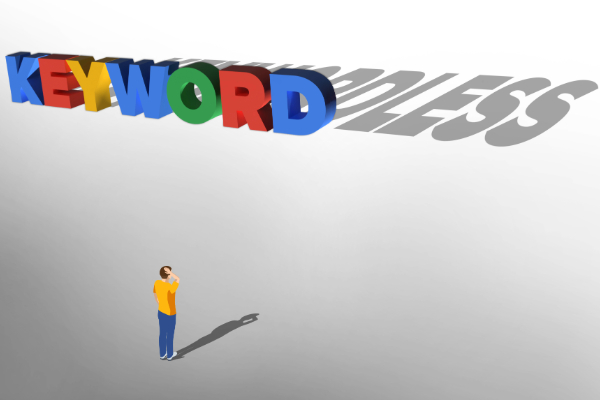
The way consumers discover products has fundamentally changed. Traditional keyword-led search journeys are increasingly being replaced by recommendation-led experiences shaped by creators, social proof, retail algorithms and personalized content feeds. In many cases, by the time a customer reaches a product page, much of the decision-making process has already happened.
This creates a significant challenge for marketers because measurement models have not evolved at the same pace as consumer behavior. Many brands still optimise towards the most measurable touchpoints, such as branded search, retargeting or platform-reported ROAS. Yet those touchpoints are often capturing demand rather than creating it.
Strong performance metrics do not always reflect incremental growth. In increasingly automated media environments, brands can end up paying to convert customers who were already likely to purchase through retailer familiarity, existing intent or loyalty behaviour. The challenge is no longer simply understanding what converted, but identifying what genuinely influenced the outcome.
That is why incrementality is becoming one of the most important concepts within modern commerce media strategies.
Towards incrementality
We are already seeing brands rethink their approach around demand creation and measurable incremental impact rather than pure demand capture. Working with L’Occitane, we developed a full-funnel Amazon growth strategy designed to unlock growth beyond branded search and hero SKUs. By combining sponsored ads, DSP and Amazon Marketing Cloud insights, the strategy focused on driving new-to-brand acquisition and identifying the most incremental drivers of performance.
The result was a 39% increase in shipped revenue, while more than 60% of advertising-attributed customers were new-to-brand.
Shortlisted at the 2026 Drum Marketing EMEA Awards in the ‘Best Use of Retail Media’ category, our work with Helen of Troy’s OXO brand demonstrates how connected commerce strategies can drive measurable incremental growth beyond the point of purchase. We combined on-site retail media within the John Lewis ecosystem with off-site demand generation across channels, including TikTok, focusing not just on platform metrics but on measurable sales uplift and true incremental impact.
By connecting retail media with broader demand generation activity, the campaign delivered a 408% increase in year-on-year sales growth while maintaining strong efficiency.
Connected strategies
These examples reflect a broader shift happening across commerce media. Retail media remains a critical growth channel, but it cannot operate independently from the wider customer journey. Brands increasingly need connected strategies that align media, content, creators, audience insight and measurement frameworks around shared commercial objectives.
Trust is also becoming a more influential performance driver. Consumers are navigating an environment shaped by sponsored recommendations, overwhelming choice and increasing competition for attention.
As a result, creator credibility, retailer trust and community validation are playing a larger role in shaping purchasing decisions before customers ever reach a product page.
The brands that succeed in the next era of commerce media will not necessarily be the ones spending the most across platforms. They will be the ones that understand how demand is created upstream of conversion, how channels influence one another and how to measure growth beyond last-click attribution alone.
Commerce media is no longer just about capturing intent at the point of purchase. It is about building connected strategies that influence decisions earlier, create measurable incremental demand and connect every stage of the customer journey into a unified growth engine.